


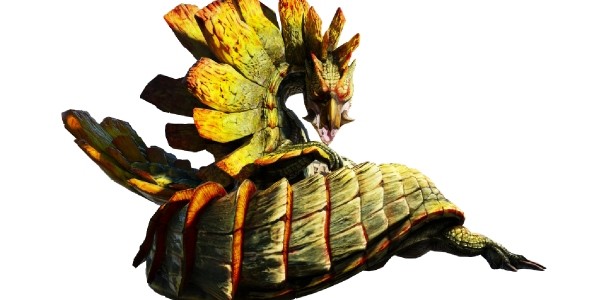
It goes without saying the actual monster-slaying (or -capturing) aspect of a Monster Hunter game is its greatest. And in terms of this series of posts, we’ve finally arrived at just that point! This post will go over the basics of combat and monster behavior. However, part of the fun of Monster Hunter is that there are so many weapon types and play styles to choose from, so don’t expect any in-depth tutorials here!
Combat Basics: Blademaster
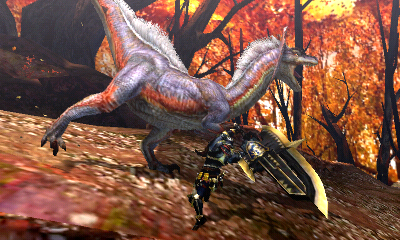
The X, A, and R buttons are your bread and butter when it comes to wielding a blademaster weapon. You’ll use the X button to unsheathe your weapon, and if you’re moving when you do this, you can get a first strike in at the same time. After that, it’s all about using combos and power strikes to put the hurt on your foes. If your weapon includes a shield, use the R button to use it. If not, the R button probably does something to transform or power-up your weapon. Every weapon is different, though, so the best advice I can give you is to practice, practice, practice! With enough experimentation, you’ll discover the intricacies of your weapon, and the feeling you get when you do that is priceless.
Combat Basics: Gunner
I have a small confession: I don’t have much experience at all using gunner weapons. Fortunately, though, there are only three: the bowgun, the heavy bowgun, and the bow. The two bowguns shoot really forceful, deliberate shots. They’re also fairly easy to learn, though somewhat difficult to use. You’ll select your ammo, “reload” it, aim, and fire. The X button is only used to unsheathe, reload, and perform a jump attack. The A button is what you’ll use to shoot, while the R button brings up an aiming cursor.
Combat Basics: All Weapons!
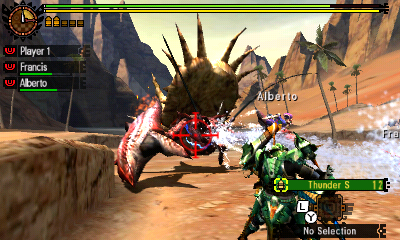
One thing you may find yourself doing a lot mid-battle is sheathing your weapon (with the Y button). This is normal and often the best decision you can make. Depending on the weight of your weapon, it can give you a much-needed chance to escape from a large monster’s attacks to use a health-restoring potion (you can’t use items while your weapon is out anyway).
If you don’t need a break from the action, you’ll be using the dodge maneuver a lot (by pressing the B button). You can usually dodge in almost any direction you want. Often you can dodge in the middle of a combo. If it’s a choice between trying to finish a combo and dodging, dodge. There aren’t a whole lot of things that are worth getting walloped by a monster over.
Monsters!
There are many types of monsters in any Monster Hunter game, each with a name and everything. You’ll see small monsters everywhere. They usually don’t pose much of a threat, but you can still kill and carve them. More often than not, though, your quarry will be one or more large monsters. And unless you’re using over-powered equipment against under-powered prey, large monsters take a good long time to defeat. They never have a health bar, either. It’s up to you to gauge a monster’s remaining life-force based on its behavior. It may start breathing heavily or taking long breaks in between attacks. Sometimes a weak monster will actually attack fiercer than normal for a time. An apparent limp means you’ve got a monster on the ropes.
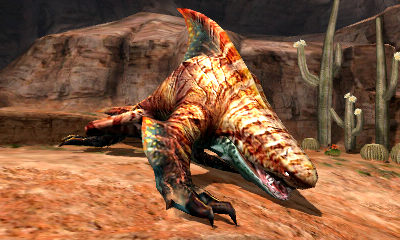
Large monsters fight with varied attacks and patterns. As you gain more and more experience, you’ll start seeing signs that may save you a little bit of HP or keep you from fainting completely.
I mentioned this briefly in Part 1 of this series, but there are items that can mess with monsters, deal massive damage, or help your teammates. Traps are widely-used items and are also required for capturing a monster. As the name implies, traps stop monsters in their tracks for a short time. They’re pretty effective, so they take a bit of time to set up. Once a monster has fallen into your trap, you may want to use a barrel bomb. There are a few different varieties of barrel bombs, but all of them will damage you and your teammates if you are caught in the blast radius, so use caution.
Other useful items will come in handy, so just be sure to read descriptions and experiment. Monster Hunter 4 Ultimate will be here in one week, so catch up on some additional reading!
- Monster Hunter Tips – Part 1: The Basics
- Monster Hunter Tips – Part 2: Weapons and Armor
- Monster Hunter 4 Ultimate Preview
I’ll be preparing just one more post of Monster Hunter hints for the day of the game’s release, February 13. This one is special in that I’m addressing any specific questions or concerns newcomers have. Leave any you might have in a comment below and I’ll see you in a week!


